Why Your Next Project Needs the Sweet Food Typeface
There is a specific feeling we get when we look at a perfectly frosted cupcake or a stack of colorful macarons. It is a mixture of joy, nostalgia, and a sense of fun that makes us want to engage. As designers and communicators, we spend hours trying to capture that exact emotional response in our work, whether we are designing a logo for a new bakery or laying out a children’s storybook. The challenge, however, is that standard fonts often fall flat. They convey information, but they rarely convey delight. This is where the visual language of typography becomes your greatest asset, specifically when you move away from rigid corporate typefaces and embrace the personality found in display fonts like Sweet Food.
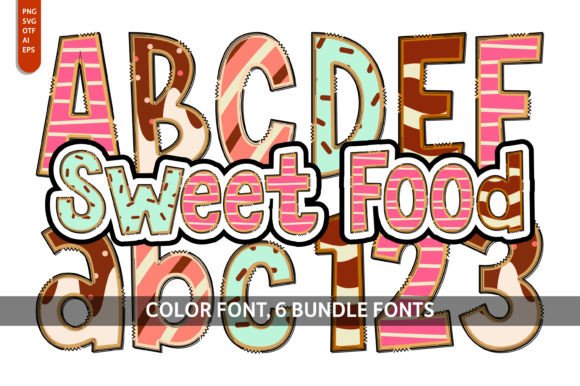
Sweet Food is not just another file in your font folder; it is a collection of desserts-themed color fonts designed to bridge the gap between text and illustration. Unlike traditional typefaces that rely on a single solid color, color fonts (or variable color fonts) contain their own visual data—textures, gradients, and multiple hues—built right into the glyph. For the creative professional, this changes the game. It means that the moment you type a word, you are adding a layer of artistic complexity that usually requires hours of manual vector work in Illustrator or Procreate. If you are working on a project that needs to feel whimsical, handmade, or vibrant, understanding how to wield a creative font like this is essential.
Injecting Personality into Branding and Packaging
For small business owners and brand strategists, the "personality" of a brand is often the deciding factor for customers. We see this clearly in the food and beverage industry, but it applies to toy stores, stationery shops, and event planners as well. When you are building a brand identity, you want typography that speaks before the customer even reads the words. Sweet Food functions as a premium font choice for brands that want to position themselves as playful and approachable.
Consider the power of packaging design. You are walking down a grocery aisle or scrolling through an e-commerce site. A product using a standard sans serif font looks competent, but a product using a whimsical, textured typeface immediately signals that the experience inside is going to be fun. For a cupcake shop or a candy brand, using Sweet Food on labels, boxes, and menus creates an instant visual association with the product itself. It eliminates the need for excessive clipart because the typography is the art. However, a word of advice from a practical standpoint: because these are color fonts, you need to ensure your printing capabilities match the design. While they look stunning on digital screens, using them in print requires specific technology (like SVG-in-OpenType support), so always test your assets before a large run.
Engaging Young Readers and Digital Audiences
The prompt mentioned children’s books, and for good reason. Editorial design for younger audiences requires a delicate balance of readability and engagement. A child’s eye is drawn to color and shape, not just letters. Standard serif fonts can feel too academic, and standard sans serifs can feel too sterile. Sweet Food offers a solution that mimics the way children view the world—a place full of color and texture.
When designing a book cover or chapter headings, using a display font that incorporates dessert themes can make the reading experience feel like a treat. It invites the reader in. But this application extends far beyond print media. If you are a content creator or a social media manager, think about your Instagram Stories, your YouTube thumbnails, or your blog headers. In the fast-paced world of social media graphics, you have milliseconds to stop the scroll. A standard title gets ignored; a title that looks like it is made of frosting or candy commands attention. It creates a "thumb-stopping" moment that is crucial for engagement.
Furthermore, this style of font works exceptionally well for digital products. If you are selling planners, digital stickers, or educational worksheets, incorporating a typeface like Sweet Food adds perceived value to your product. It signals to the customer that your product is "premium" and well-designed, justifying a higher price point than a standard black-and-white PDF.
The Art of Font Pairing and Hierarchy
One of the biggest mistakes designers make with expressive typefaces is overusing them. If every sentence looks like a party, the reader gets exhausted, and the text becomes unreadable. The secret to using a bold typeface like Sweet Food effectively lies in font pairing and hierarchy.
Think of Sweet Food as the "headliner" of your design. It is perfect for H1 headers, logos, short call-to-actions, or pull quotes. It is not meant for body copy. Because of its intricate nature, it is best kept to short bursts of text where the visual style can be appreciated without straining the eyes. To support it, you need a partner font that acts as the "straight man" to its comedy.
A clean, modern sans serif font is often the best companion. The contrast between the playful, textured display font and the clean, geometric lines of a sans serif creates a professional balance. For example, pairing a Sweet Food header with a font like Montserrat or Open Sans for the body text ensures that your message is still communicated clearly and legibly. This contrast is a fundamental principle of modern typography; it allows the creative font to shine without compromising the user experience.
Commercial Licensing and Asset Management
For the entrepreneur or freelancer, the technical side of design assets is just as important as the aesthetic side. When you find a font that fits your vision, the first question must always be about licensing. Sweet Food is a commercial font, meaning it is designed for professional use where you can monetize your designs. However, "commercial use" can mean different things depending on the foundry.
Before you launch a new logo or a line of merchandise, review the licensing details. Does the license cover digital ads? Does it cover physical merchandise like t-shirts or mugs? Is it a "desktop" license or a "web" license? These distinctions matter. A common pitfall for small business owners is assuming that buying a font once allows them to use it for everything, everywhere, forever. Taking the time to understand the terms of use protects your business from legal headaches down the road.
Additionally, consider the technical setup of color fonts. While support has grown massively in recent years with software like Adobe Photoshop, Illustrator, and even Canva, it is not universal across all platforms. Always test the font in your specific design environment to ensure the colors render correctly. Sometimes, a color font will fall back to a solid black version if the software doesn't support the advanced features. Knowing this beforehand allows you to plan a fallback strategy, perhaps using a standard script font for contexts where the color version won't work.
Real-World Applications: From Posters to Merchandise
Let’s visualize specific scenarios where Sweet Food elevates a project. Imagine you are designing a poster for a local community bake sale. Instead of a generic flyer, you use the font for the headline "Bake Sale." Instantly, the poster feels handmade and inviting. It captures the spirit of the event better than any stock photo could.
Or, consider the booming market of print-on-demand merchandise. Tote bags, coffee mugs, and stickers are popular because they allow people to express their personality. A mug that says "Don't be bitter, be sweet" or "Baker at work" using a dessert-themed color font is far more likely to sell than one using a standard Arial typeface. It appeals to a specific niche—bakers, sweet lovers, and those with a playful aesthetic.
Even in the corporate world, there are moments for levity. A marketing agency pitching to a client in the confectionery space might use Sweet Food in their pitch deck to show that they "get" the client's brand voice. It shows empathy and understanding of the audience. It demonstrates that you aren't just applying a generic template; you are curating a visual experience tailored to the project's goals.
Final Thoughts on Choosing Your Typography
Typography is often called the "voice of design." Just as you would choose a specific tone of voice when writing an email or a blog post, you must choose a visual tone for your text. Sweet Food is a typeface that speaks with a smile. It is whimsical, it is artistic, and it is unapologetically fun.
However, it is a specialized tool. It is not the right choice for a law firm’s website or a solemn editorial piece on global economics. But for the baker, the children's author, the event planner, or the content creator looking to inject some joy into their work, it is an invaluable asset. By pairing it wisely, respecting its visual weight, and understanding the technicalities of color fonts, you can transform a mundane layout into something that truly connects with your audience. In a digital landscape that is often cluttered and serious, a little bit of sweetness might be exactly what your brand needs to stand out.